This is a rough draft (V6.2.1) of the prologue to the memoir I’m writing about the unfolding of my design consciousness. The working title is Creation Story (which I’m rather partial to) . Its still tender writing but carries the intent of the book.
Prologue: Third Time Is A Charm
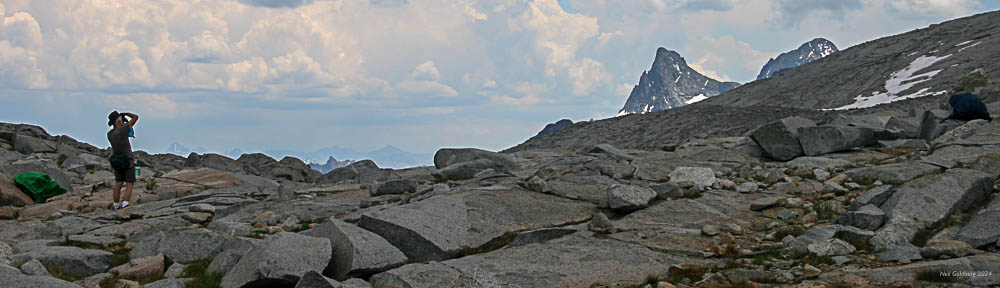
The slopes of Mount Lyell disappear below the horizon, a two day hike away. The forty five pound pack on my back insisted that it was much further than it appeared. Silicon Valley lay to the west under a yellow pall of summer smog. I had just quit my career for what I promised myself would be the last time. Craggy snow dappled peaks along the John Muir Trail were my chosen setting for a stock-taking, a meditation on my career in design, and where I might take it next. I had become a designer believing that it was a way in which I could apply my creative inclinations to make the world a better place than the one I had found in Apartheid South Africa where I had grown into adulthood.
Disappointed by a profession I found to be fixated on superficial appearances ignoring the urgent needs of our humanity lurking just beneath the surface sheen that was presented to me as its stock in trade, I’d spent the better part of my career pursuing an approach to design that satisfied my soul’s yearning to make things better, for how else would one want to make thing by design? Each time I felt I had a strategy or method durable firmly in my grasp, satisfaction duly slipped away and I tacked again. Thirty five years is a long time to stick in the pursuit of an ideal, and I could hardly say which had changed more; the design discipline and profession that I entered with dreams of changing the world, the world that had changed but not always for the better, or me.
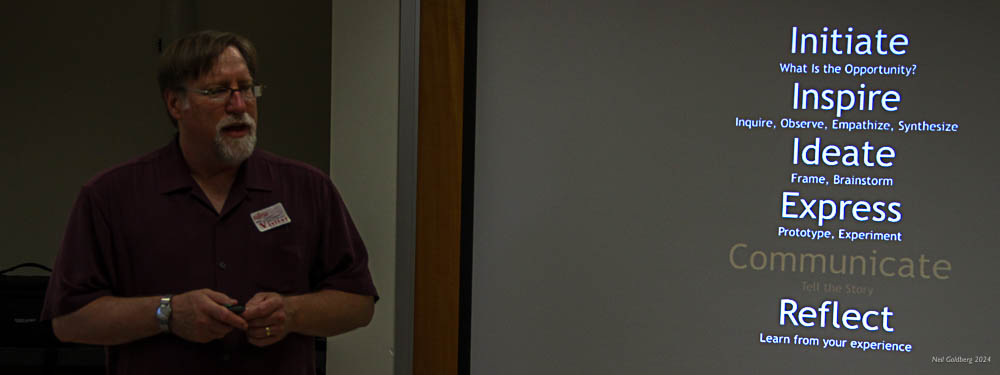
The business my walk into the wilderness took me away from was a consulting firm that helped companies build their capacity for design innovation. We would introduce them to and train them on the newly minted discipline called “design thinking” and guide them in weaving it into the fabric of their organizations. Design thinking is a distillation of the tried, tested and previously tacit processes and mindsets by which designers tackle complex creative challenges. It had emerged over the previous decade and a half and was taking off like the wildfires that have increasingly become the bane of wilderness already precariously on the edge.
Design is a particular kind of creativity, the art of making things up that is distinct from making them in a world in which replication of forms has become the mode by which most stuff is produced. It is how we arrive at both the form and function of things, utility and beauty in a designed object that is by its existence all things at once. Design is how we make new things by design, with purpose and deliberate intent. It is how we address wicked problems with simple solutions. Design is how we make things up out of the whole cloth where our profound and wild imaginations meets the world as it is to create the world as we intend it to be. Design is the art of creative intention which we invoke every time we hear that this or that outcome was gained by design.
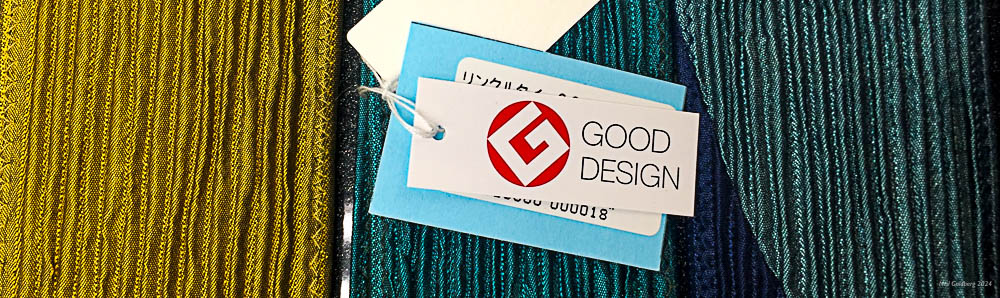
Despite a culture fixated on design that is deemed to be good, I had found again and again, that even objects awarded the “good design” seal of approval (I myself had been on the receiving end) are often not good for much besides the egos of their wealthy patrons and bank accounts of the few who benefit directly from the accolade.
The full moniker of the design-thinking practice I was walking away from included the qualifier “human-centered”, as in human-centered-design-thinking. This was to distinguish it from the way that design had typically been taught (to designers of all stripes, including engineers, architects and computer scientists amongst all the other design specialists of which there is a growing list) with a fixation on the objects that are to be produced rather than those for whom they are intended or whose lives would be altered by its effects. I entered design practice with the hope that I could use it to relieve some of difficulty and ugliness of the world as I became aware of it.
Early on I recognized that the design ethos and methods I was taught weren’t up to the enormity of the challenges I knew I’d face in a world being changed at the speed of technology. I chased methods that promised greater rigor to discern what is needed if we are to stay true to our humanity and bring forth the exact measure to meet the need. Human-centered design thinking was the endpoint of my chase so far that day I stepped into wilderness, and its success had felt like my own. Optimism had once again been trumped by experience, and I had come to nature to consider where I might turn next.
Art is best understood as the skill gained of practice, a repetitive cadence of doing things again and again until you get it right. Until it feels as if you’d got it right. Art isn’t only a painting for a gallery but everything that is made up to be made by skillful action. I had come to wilderness to cleanse my palette of any lingering expectations I had that more artfulness in design alone enable us to make a better world. If nature is the counterpoint to art that modern cultures profess, I had come to immerse myself in nature for a moment, to find respite from art. With each step towards the majesty of Mount Lyell, it became evident to me that I had not gotten away from art at all. I found it everywhere I looked. Everywhere I stepped.
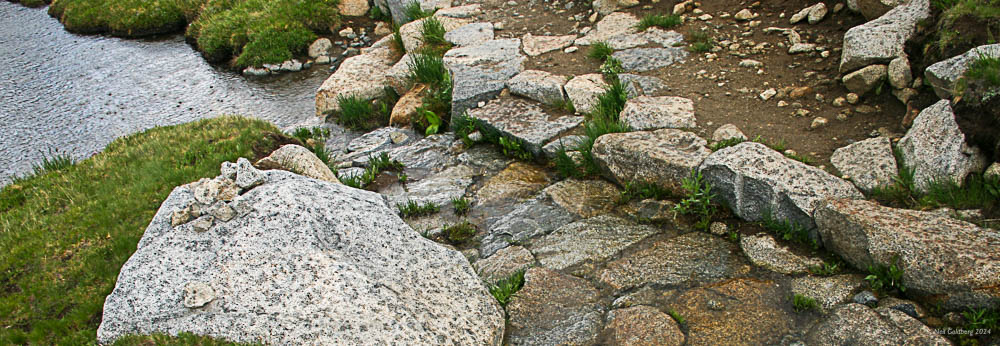
Art was in the beautiful stone paths and stairways that carried me, mile after meditative mile whose profound design first caught my attention. They had been conceived of by the architects of the Civilian Conservation Corps in the 1930s and laid out stone by precise laid stone, by the unsung artisans that made up the work crews given gainful employ by the New Deal antidote to Depression to give access all who sought the wildness of nature untouched.
It was in the exquisitely designed boots, backpack, tents, and clothing whose refined designs made it possible for someone to spent 5 days on the trail as far away from the support structures of the modern way of life we call civilization as his almost sixty year old legs could carry him. Art was in the dehydrated food pouches I hauled into wilderness and the stove, pots and plates I needed to eat it far away from the designer kitchen I’d left behind. Art was in the mere existence of such a thing as the John Muir trail, Yosemite National Park and the entire jewel that is the National Park Service in which I recognized the creative hand of designers who took what began as a novel idea and made it as real as the forty five pounds I carried on my tired back.
With each step into nature, my wonder at the majesty of Wilderness was confounded by the paradox of art in its midst. Design, and the technologies it gives form to (that to previous generations would have been regarded as magic), had not only given me access to an artful verisimilitude of wilderness, but the technological trajectory it had set us on was undermining our sustained wellbeing, even our survival.
Amidst beauty I reflected on the extent to which the park’s delicate ecosystem was being undermined by the ravages of a climate changing faster that nature could track with; shifts in precipitation patterns, reduced snowpack, glacial retreat and wildfires. Nor was the shadow of art contained within the parks generous boundaries; ecological collapse, species extinction, extractive ruin, pollution were artfully out of sight, but everywhere in my hyperventilated awareness.
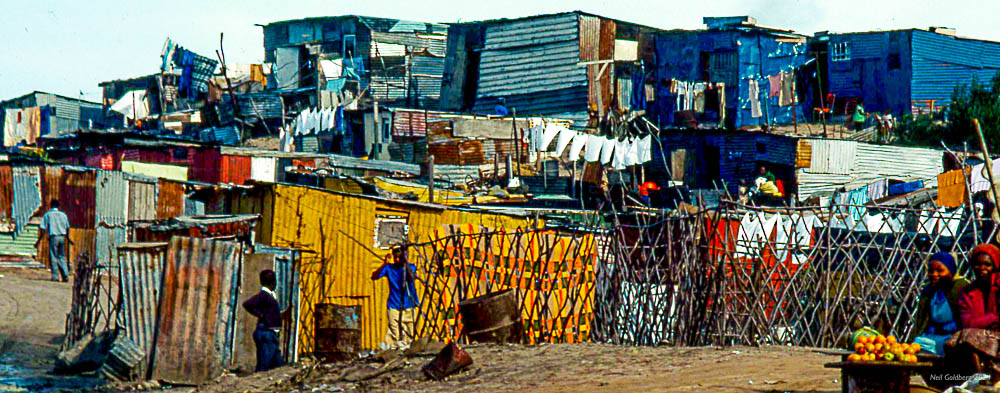
Deepening poverty of many at the expense of the enrichment of a few meant that such access was increasingly not a matter of the exquisite design of the trails, but increasingly to those privileged enough to be able to make it there and afford the benefits of the exquisitely designed gear we each carried. Most of the 8 billion people alive on the planet didn’t even have access to a small patch of green in cities that had grown out of all natural proportion. A deep sense of alienation and a loneliness crisis that has led the surgeon general of the United States to declare it a national emergency.
At the time of the hike in 2013, carbon dioxide had just topped 400 parts per million, well beyond the number that the IPCC had cautioned against crossing to avoid reaching critical tipping points, and early evidence of the coming ravages of a change in the climate, the first to be attributed to the creative destructiveness of a single species, a crumbling urban fabric, cities designed as much for cars as the people who used them to get around, an epidemic of loneliness in the wealthiest country in the world.
Brahma and Shiva ride together. By design we create heaven and hell.
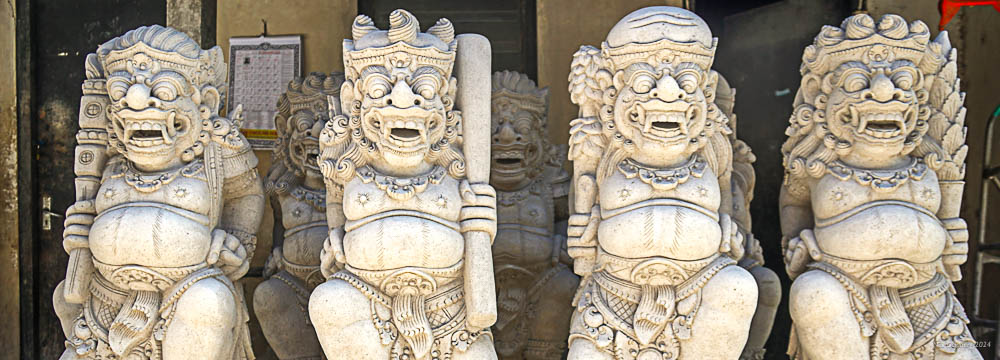
While I couldn’t get away from the benefits and advantages of the intentional creative praxis that we call “design”, I couldn’t get away from the multitude of unintended consequences that lay a trail of destruction in its creative wake either. For five days in wilderness I meandered between awe and despair. Human-Centered design methods may have been a step in the right direction, but, it was becoming clear to me, it wouldn’t be enough. It wasn’t just an education in design thinking that we’d need to make the world we would love live in, we’d need a shift in the consciousness that propels us on our path of creative intent and conviction.
Now as I reached the crest of the climb the pack on my back felt heavier and heavier, Mount Lyell loomed before me in all her magnificent and natural glory. The carefully crafted path of manually-cut stone formed a firm pavement beneath my feet, the next challenge on my path as a designer would be to raise design consciousness. Consciousness is the container for all thought and action. It guides us in our recognition of what is necessary and what is superfluous, what is good and what, in truth, is a harm to our wellbeing. Design consciousness then is that awareness that drives our designs.
In its essence, design consciousness is our recognition of the agency we have to shape the world of our day to day experience. It’s not only formally trained designers like myself who can bear the title “designer”, but everybody engaged in a world-building creative effort with intended outcome or effect. Within this baseline of design consciousness is the awareness that kept washing over me with every step into wilderness; that every artifact of the human imagination is an object of design. We’ve proven ourselves to be a monumentally creative species having created a world that includes the grand vision of the John Muir Trail on one hand, and a Hello Kitty doll on the other. Its not a question of whether we ought to design things or not – we simply do, all the time. That is not to say that we always do it well, skillfully, consciously or not. And if its true that by design we create the world of our day to day experience, then so it it way too important to be left to the experts alone.
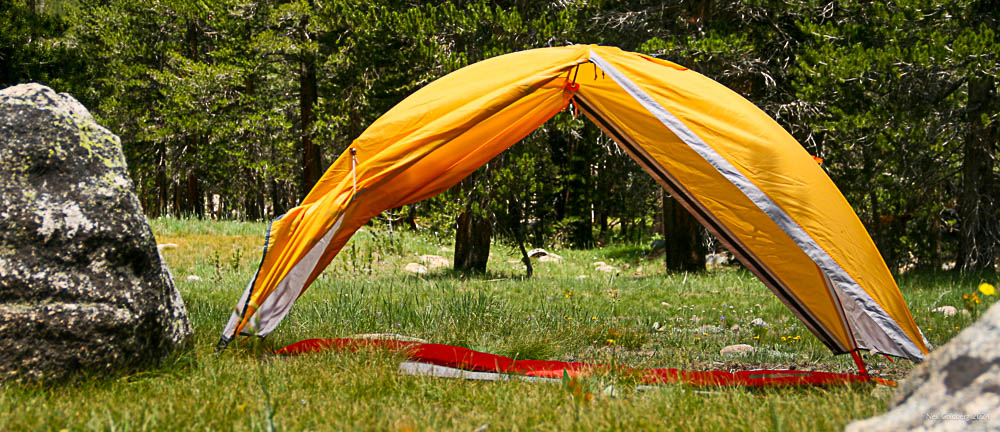
My ultralight tent faced directly toward Mount Lyell. The moon rose brilliantly into a cloudless sky. As I watched the moon rise in slender crescent the though wafted in with the certainty that some ideas have when they grab a hold of you. I was going to raise awareness about the values and beliefs that are to be reckoned with as part of a part of our design thinking that isn’t evident in any creative brief we may get. I was going to bring attention to the interests that subvert even the best of our intentions; a complexity of power that prefers to hide out of sight. I decided I had to show what I’d seen over three and a half decades in an industry I loved as dearly as myself, and was just as suspicious of its capacity for self-deception. The first step in my quest to raise design consciousness, I concluded, would be to write a book in which I could lay it all out.
It would be a creation story for complex, and challenging times.
This would be my third attempt to write about the value underpinnings of design and why design matters so much. Neither of the previous times I’d been ready. Now I had the benefits of experience and some of the wisdom that comes with it.
The first attempt came when I decided to pursue a Masters degree in what was then the freshly minted discipline of “design research” in 1981. I’d just finished my studies in industrial design in Manchester and came to the same conclusion that others had at the time: that the design methods I was being taught were not up to the challenge of creative change in a society hurtling along at the speed of technology. Rather than the beauty of Wilderness, what little remained of my student budget only afforded me a spot in a squalid squat in South London where I bided my time while I tried to figure out what came next. Top of my list was a spot in the only program I could find (in the world) that actually had the title “design research” in its title.
The application I made to the post-graduate degree in the Department of Design Research at the prestigious Royal College of Art proposed that I would do a series of case studies in which I’d look at the way in which designers’ beliefs and values shaped design outcomes, beyond objective technical and human and social factors. On the strength of that application, plus the regular visits I made to the school to make sure I was known to everyone concerned, I was offered a place. I was delighted. But my time in the squat was well spent on applications and essays to a number of other schools. I eventually took a spot that brought me to America. That one (and part of the reason I took it) was more practical than theoretical in nature. So I never did do those case studies. Writing about Design Axiology turned to Design Praxis. But that’s another story that we’ll get to in its due time.
The second attempt to write came when I was running my design agency, Praxis Product Design, in Silicon Valley. A marketing consultant I was working with convinced me that a book I had in mind with the working title “Design Matters” would be good for business. He hooked me up with a ghost writer in Washington DC to whom I downloaded as much of my story and as many of my ideas as I could over many hours of interviews over a hollow sounding land-line which was the best we had at the time. It was the go-go run up to the Internet bubble of the late 20th century. I got busy and the premise of the project that it would be “good for business” didn’t seem relevant anymore. And I didn’t want to put out the puff piece that the second draft I received from the ghost-writer made clear that the book he had in mind didn’t much match mine. So I abandoned the project as internet bubble inflated and made additional marketing not only unnecessary, but impossible to absorb without stretching myself any further than I was.
Its taken some time since that moment in Yosemite to write what I had in mind, but didn’t yet have the words for. Giving form to the ideas that are hatched in imagination is what designers do and I have struggled with what form it should take. At first I tried to boil it down to a formula, but what I have in mind isn’t formulaic. I thought to write it as a history, but I’m not a historian. I thought to write it as a manifesto, but I’m not a crusader. I thought to write it as an academic text, but that would only be accessible to design geeks like me. That is the form that was easiest to reject.
Everyone has the makings of a designer, as we will get to in due course, and agility with the design consciousness with which we live our lives can be helpful to anyone who cares about the tension between our creative passions and the shadows that its unbridled expression can cast on the world of our existence.
Instead I have taken advice suggesting I write this book that has been living in me through much of my life as memoir. Not that I have lived anything close to an exemplary life. I have written it to represent the universal within the particular. It is the story of the emergence of the design consciousness of a lone designer. If I get it right, it should capture the emergence of the design consciousness of others, of industrial modernity at a time of reckoning. Perhaps you will find parts of yourself in these pages too.
In memoir I hope to shape a lens through which you can view the world as we know it, not as something that simply came into being of its own accord, but in which we – humanity writ large, Homo Sapiens sapiens as a species – have had an outsized role in shaping to our will. Over which we have exerted our creative agency, our ability to give form to our intentions – not always skillfully and with profound unintended consequences which we are just beginning to come to terms with. Not always with wisdom. Too often motivated by hubris and greed. If we’re to continue doing so, as we surely will, it would be best to recognize what drives our creative impulses, and offer us some choices not only over what we end up creating, but of the beliefs, desires and values that we bring to drive our creative bus – personally and collectively – so that we might arrive at our preferred destination without any major mishaps along the way.
That lens will allow you to see the world in a new way. It will allow you to discern your own design consciousness. The possibilities it suggests to you to engage in the world of change at this critical moment in evolutionary time – not as a revolutionary or an incrementalist, but by design. I’ve come to recognize that it is more than a memoir that I’m writing. It is a creation story for complex time, to which I invite you, my dear reader, to discover your own.


